For nearly three decades, I sat in rooms where people tried to explain America to itself. Some rooms were filled with hopeful young professionals. Some with exhausted HR directors. Some with nervous executives trying to avoid saying the wrong thing while also trying to understand why so many talented people were quietly disengaging from their organizations.
And somewhere in the middle of all those conversations, workshops, strategic plans, listening sessions, and difficult moments, diversity, equity, and inclusion became one of the most influential leadership conversations in modern American business culture.
Not perfect. Not polished. But powerful.
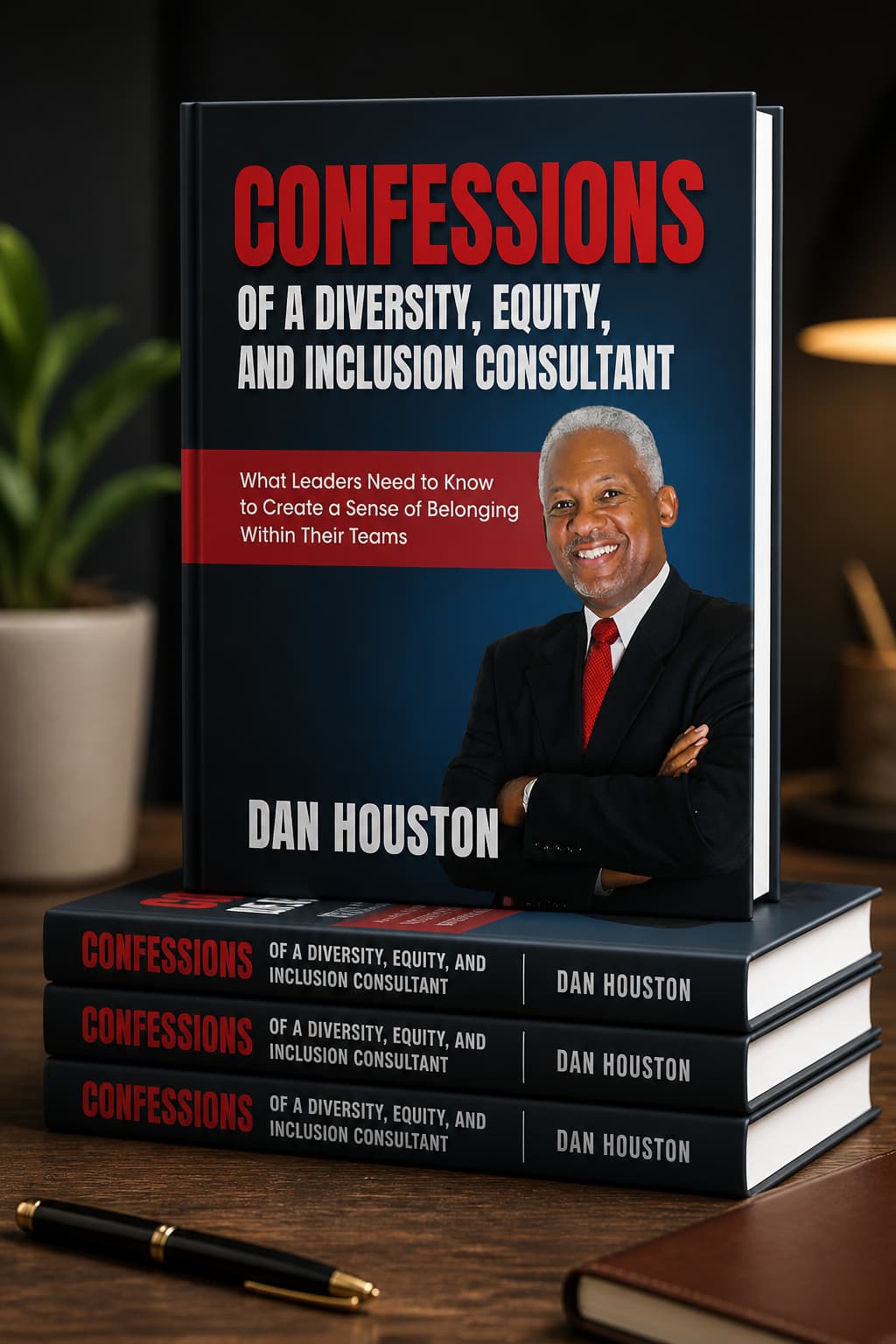
As I wrote my new book, Confessions of a Diversity, Equity, and Inclusion Consultant, I realized something important. This work was never just about race. It was about leadership maturity. It was about whether organizations had the emotional intelligence and moral courage to tell the truth about how people experience work, power, opportunity, and belonging.
1. It Was Never a Perfect Process
Lord knows we made mistakes. Some organizations reduced the work to slogans and posters. Some treated it as a public relations exercise rather than a transformation process. Some consultants promised quick fixes for problems rooted in generations of culture and organizational habit.
But despite all of that, something extraordinary happened. We built an infrastructure of dialogue across America. Companies created leadership pipelines. Universities developed equity initiatives. Managers began discussing psychological safety, bias, belonging, and emotional intelligence in ways they never had before. That matters.
Progress is rarely neat. Democracy is messy. Organizational change is messy, and growth itself is messy. But imperfect progress is still progress.
2. It Changed the Leadership Conversation
For nearly a decade this work held center stage in boardrooms, conferences, nonprofit retreats, and executive coaching circles. And underneath the political arguments was a deeper truth: people wanted dignity at work.
Employees wanted to be seen. Leaders wanted healthier cultures. Younger generations demanded authenticity instead of corporate theater. The real shift was not simply about representation. It was about redefining leadership itself.
Leadership began moving away from command and control toward empathy, listening, adaptability, and emotional intelligence. That is one reason I tell leaders that emotional intelligence is no longer optional. It is leadership oxygen.
3. It Was Never About Punishing Anyone
One of the biggest myths was the idea that the purpose was to attack or replace white men. That misunderstanding proved politically useful to some, but it was never the core mission of serious work.
The goal was always broader: to expand opportunity, reduce structural blind spots, and help organizations access talent that had historically been overlooked.
Fear closes organizations. Curiosity expands them.
4. Tokenism Was Used to Question Competence
One of the quiet wounds many leaders of color carry is the suspicion that their success is somehow accidental. They hear it in whispers.
The truth is that most leaders of color I know were not underqualified. They were overprepared. They learned to work twice as hard, explain themselves more carefully, and survive systems that often measured them by a different standard.
Many leaders are not struggling with their ability. They are struggling with carrying the emotional weight of being constantly evaluated.
5. Fairness Requires More Than Logic
One of the great mistakes organizations make is believing that fairness automatically wins once people hear the right argument. History says otherwise.
Discrimination is not dismantled only through policies or presentations. Discrimination changes when courageous leaders act differently.
- When managers interrupt bias in real time.
- When executives sponsor emerging talent.
- When organizations stop confusing comfort with fairness.
- When leaders choose courage over silence.
And maybe that is the real lesson beneath all of this. Leadership is not merely about position. It is about the courage to move forward anyway.